

I was born Brazilian. that came with a jersey I never asked for.
Nobody sits you down and teaches you to love soccer. When you arrive home the first time from the hospital, there is a jersey already waiting for you in the crib.
By the time you’re five, you know the difference between a good cross and a lazy one. You don’t remember learning it. It’s just there, like your last name.
And the world knows it too. Every World Cup, no matter how the team actually looks in the months leading up to it, Brazil walks in as a favorite.
Other countries hope for the title. We’re expected to win. That’s not pressure we built, it’s pressure we inherited, back from the Pelé years, the 60s and 70s, when we were simply better than everybody else on the planet at this one thing.
Here’s the part that stings a little. The current Brazilian team is still walking around like it’s 1970.
When Talent Stops Being Enough
I think about this every time I meet someone—in business, in a newsletter reply, at a networking event—who was “the smart one” growing up. School came easy. They are blessed with good genes.
Deals just fall in place. For a while, everything comes easy when you’re naturally gifted at something.
Then one day the competition catches up. Not because they were born with more. Because they worked harder while others coasted.
Brazil didn’t lose its love for the game. We just forgot that love isn’t a strategy. Passion gets you in the door but it doesn’t keep you in the room.
The Cost of Arrogance
I’m writing this right after Brazil got eliminated. By Norway.
Not England, the country who invented soccer. Not Germany, Argentina or France—the usual soccer powerhouses we brace ourselves for. We lost to Norway—a country most people can’t even name a professional soccer player from. A country with no tradition in this sport at all.
That’s the part that actually hurts.
It’s not that Norway got lucky. They deserved to win. They trained harder. They stayed hungrier. And they walked onto that field humble. Brazil’s team, on the other hand, got comfortable.
Somewhere between Pelé and today, “we’re the best” stopped being something we proved and started being something we assumed.
That’s arrogance dressed up as pride. And arrogance doesn’t train. It doesn’t study film. It doesn’t ask what it’s missing—because it already thinks it has all the answers.
Humility is what keeps talent sharp. The day you believe you’ve “already arrived” is the day you stop moving, and everybody else keeps walking right past you.
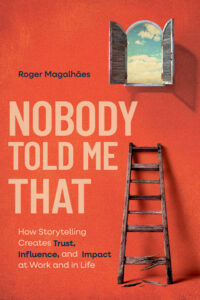
Breaking free from inherited expectations?
If you are tired of playing by old rules and want a raw, real look at navigating the modern world on your own terms, grab my book Nobody Told Me That on Amazon.
The Underdog Blessing
Now flip it. Some of us weren’t born on the “gifted” side of anything. No natural talent. No inherited advantage, no trust fund awaiting. Just a disadvantage staring back at us in the mirror every morning.
Here’s what I’ve learned owning a business for twenty years and starting over in a country that wasn’t mine: that disadvantage, if you let it, becomes the sharpest tool in your toolbox.
The guy who wasn’t handed the ball early has to study the game harder just to survive in it. He has to train twice as long just to keep up with the naturally gifted players.
He can’t coast. Coasting was never on the table. So he builds habits the naturally talented never had to build. Out of necessity.
Maybe that’s a lesson right there: use the disadvantage you have as your fuel. To pump your morale and incentivize you. There is no better feeling than being David beating Goliath!
So here’s what I keep asking myself, and maybe you should too:
Instead of focusing on the things you wish you had in your favor—beauty, money, smartness—focus on the areas that deserve improvement and can potentially become your advantage in life.
Being the underdog is a blessing in disguise. Nobody’s watching you. Nobody expects you to win. And that’s exactly when you sneak past everybody and put the ball in the net.
Warmly,

Want More Stories Like This One?
If this perspective on the underdog advantage and the trap of natural talent hit home, you’ll love my weekly podcast. Tune into No Strings Attached for short, honest episodes on business, grit, and the messy middle of building a life and a legacy.
Sign up for Stories in Motion and receive a sample chapter of Roger's upcoming book Nobody Told Me That.
A monthly reflection on life situations, business lessons, and the stories that connect us all … one word at a time.